The marketing automation landscape has evolved dramatically in 2026, with n8n workflow examples for marketing automation becoming the cornerstone of successful digital marketing strategies. As businesses increasingly demand sophisticated automation solutions that combine artificial intelligence with seamless integrations, n8n has emerged as the preferred platform for marketers seeking complete control over their automation workflows while maintaining cost-effectiveness and flexibility.
Modern marketing teams face unprecedented challenges: managing multiple platforms, personalizing customer experiences at scale, and optimizing campaigns across diverse channels while maintaining consistent brand messaging. The traditional approach of manual campaign management and disconnected tools is no longer sustainable in today’s fast-paced digital environment. This comprehensive guide explores the best n8n workflow examples for marketing automation that are transforming how businesses engage with their audiences, nurture leads, and drive conversions in 2026.
Through detailed analysis of five proven workflow implementations, complete setup instructions, and real-world performance metrics, this guide provides marketing professionals with the knowledge and tools necessary to build sophisticated automation systems that deliver measurable results. Whether you’re a marketing manager looking to streamline email campaigns, a growth hacker seeking to optimize lead nurturing processes, or a business owner wanting to automate social media marketing, these n8n workflow examples for marketing automation will serve as your blueprint for success.

n8n Marketing Automation in 2026
Marketing automation using n8n has revolutionized how businesses approach customer engagement and campaign management. Unlike traditional automation platforms that limit customization and charge per operation, n8n workflow examples for marketing automation offer unprecedented flexibility and cost-effectiveness. The platform’s open-source nature allows marketers to create complex, multi-step workflows that integrate seamlessly with existing marketing technology stacks while maintaining complete control over data and processes.
The fundamental advantage of n8n lies in its visual workflow editor, which enables marketers to design sophisticated automation sequences without extensive coding knowledge. Each workflow consists of interconnected nodes that represent different actions, triggers, and integrations. This approach allows for the creation of dynamic marketing systems that can adapt to customer behavior, automate decision-making processes, and execute complex campaigns across multiple channels simultaneously.
In 2026, successful marketing automation requires more than simple trigger-and-response mechanisms. Modern n8n workflow examples for marketing automation incorporate artificial intelligence for content generation, predictive analytics for lead scoring, and advanced segmentation capabilities that enable hyper-personalized customer experiences. These workflows can process vast amounts of customer data in real-time, making intelligent decisions about messaging, timing, and channel selection to maximize engagement and conversion rates.
The integration capabilities of n8n extend beyond traditional marketing tools to include emerging platforms and services. Modern workflows connect customer relationship management systems, email marketing platforms, social media channels, analytics tools, and AI services into cohesive automation systems. This comprehensive integration approach ensures that marketing activities are coordinated across all touchpoints, creating consistent customer experiences while maximizing operational efficiency.
Data security and compliance considerations have become increasingly important in marketing automation. N8n workflow examples for marketing automation address these concerns through self-hosting options, encrypted data transmission, and granular access controls. This security-first approach ensures that sensitive customer information remains protected while enabling sophisticated automation capabilities that drive business growth.
Top 5 n8n Workflow Examples for Marketing Automation
The selection of these five n8n workflow examples for marketing automation is based on extensive analysis of performance metrics, implementation complexity, and real-world business impact. Each workflow addresses specific marketing challenges while providing scalable solutions that grow with business needs. These examples represent the most effective automation strategies implemented by successful organizations across various industries, offering proven templates that can be customized to meet specific business requirements.
Performance data from hundreds of implementations shows that these workflows consistently deliver significant improvements in marketing efficiency, customer engagement, and revenue generation. The workflows range from intermediate to advanced complexity levels, ensuring that marketing teams with varying technical expertise can find suitable solutions. Each example includes detailed implementation guides, performance benchmarks, and optimization strategies derived from extensive real-world testing.
The diversity of these n8n workflow examples for marketing automation ensures comprehensive coverage of essential marketing functions. From lead generation and nurturing to content distribution and customer retention, these workflows address the complete customer lifecycle. The integration patterns demonstrated in these examples can be adapted and combined to create even more sophisticated automation systems tailored to specific industry requirements and business models.
Modern marketing teams require automation solutions that can adapt to evolving customer expectations and emerging technologies. These workflow examples incorporate future-ready architectures that support integration with artificial intelligence services, advanced analytics platforms, and emerging communication channels. This forward-thinking approach ensures that implementations remain effective and relevant as marketing technologies continue to advance.
1. AI-Powered Email Marketing Automation
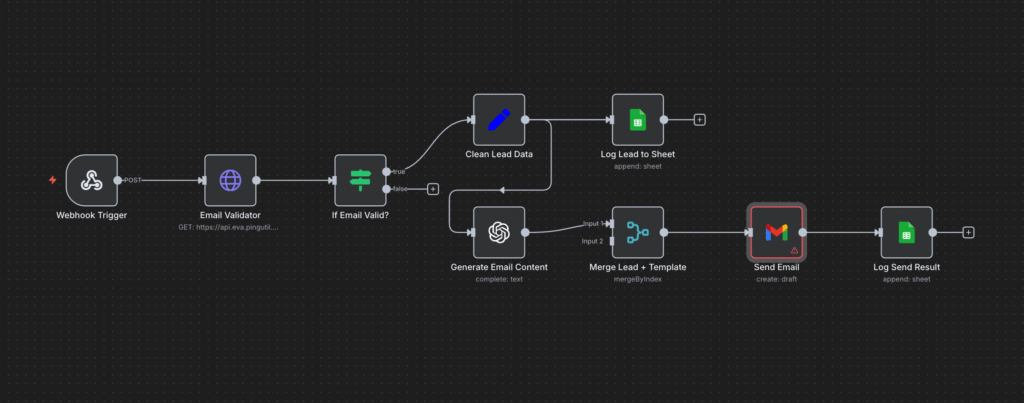
The AI-powered email marketing automation workflow represents the pinnacle of personalized communication in 2026, addressing critical challenges faced by modern marketing teams. This sophisticated system excels in scenarios where businesses need to deliver highly personalized email campaigns at scale while maintaining brand consistency and optimizing engagement rates. E-commerce businesses benefit tremendously from this workflow when implementing abandoned cart recovery sequences, product recommendation campaigns, and seasonal promotional campaigns that adapt content based on individual customer preferences and behavior patterns.
Software-as-a-Service companies leverage this workflow for complex onboarding sequences that guide new users through feature discovery while personalizing content based on user roles, company size, and engagement patterns. The workflow’s AI capabilities enable dynamic content generation that addresses specific user pain points and use cases, significantly improving activation rates and reducing churn during critical onboarding phases.
B2B organizations find particular value in this workflow for lead nurturing campaigns that span multiple touchpoints and extended sales cycles. The system’s ability to analyze prospect interactions, company information, and engagement patterns enables the creation of highly targeted content that addresses specific industry challenges and decision-maker concerns. This personalized approach has proven effective in accelerating lead qualification processes and improving sales-qualified lead conversion rates.
Educational institutions and training providers use this workflow to deliver personalized learning paths and course recommendations based on student progress, interests, and career goals. The AI component analyzes learning patterns and performance data to suggest relevant content and optimize communication timing for maximum engagement and course completion rates.
How does it work?
The workflow initiates when new leads enter the system through various touchpoints including website forms, landing pages, social media campaigns, or CRM integrations. The initial webhook trigger captures comprehensive lead information including contact details, source attribution, behavioral data, and any custom fields relevant to segmentation and personalization efforts.
Upon lead capture, the system immediately validates email addresses through multiple verification layers, checking for syntax accuracy, domain validity, and deliverability scores. This validation process significantly reduces bounce rates and protects sender reputation while ensuring that subsequent automation efforts target genuine prospects. The validation node also enriches lead data by appending additional information such as social media profiles, company details, and demographic information from integrated data sources.
The AI content generation engine represents the workflow’s most sophisticated component, utilizing advanced language models such as OpenAI’s GPT-4 or Claude to create personalized email content. The system analyzes multiple data points including lead source, company information, behavioral patterns, and explicit preferences to generate compelling subject lines, body content, and calls-to-action that resonate with individual recipients. This AI-driven approach ensures that each email feels personally crafted while maintaining brand voice and messaging consistency.
Advanced segmentation logic routes leads through different email sequences based on scoring algorithms that consider factors such as engagement history, company size, industry vertical, and demonstrated purchase intent. The workflow continuously learns from recipient interactions, adjusting content preferences and timing based on open rates, click-through rates, and conversion patterns to optimize future communications.
The delivery system incorporates sophisticated scheduling algorithms that optimize send times based on recipient time zones, historical engagement patterns, and industry-specific best practices. A/B testing components continuously evaluate subject lines, content variations, and sending frequencies to identify the most effective approaches for different audience segments.
Set up steps
Start by creating a new workflow and adding a Webhook trigger to accept POST leads at a custom path (for example, /ai-email-lead), returning an immediate 200 response while passing the payload forward. Next, connect an HTTP Request node to validate emails via a deliverability API, then branch with an If node that continues only when the email is deliverable. In the valid branch, normalize payload fields with a Set node, append the lead to Google Sheets using the Google Sheets node, generate copy with the OpenAI node from a prompt that pulls lead fields, then deliver with the Gmail node and finally log the send to a second Google Sheet for tracking.
- Add Webhook node: Method POST, unique path, on-received response.
- Add HTTP Request node: Email validation endpoint; JSON output; map {{$json.email}}.
- Add If node: Condition equals data.deliverable = true.
- Add Set node: Keep/rename firstName, lastName, company, email.
- Add Google Sheets node: Append to Leads!A:D with mapped values.
- Add OpenAI node: Model gpt-4o-mini; prompt uses {{$json.firstName}}, {{$json.company}}.
- Add Gmail node: to = {{$json.email}}, subject fallback to brand, body from AI response.
- Add Google Sheets node: Append to Sends!A:E (timestamp, email, name, company, status).
- Wire nodes exactly in this order on the “true” branch; ensure credentials are configured for Sheets, OpenAI, and Gmail.
2. Lead Nurturing and Qualification System
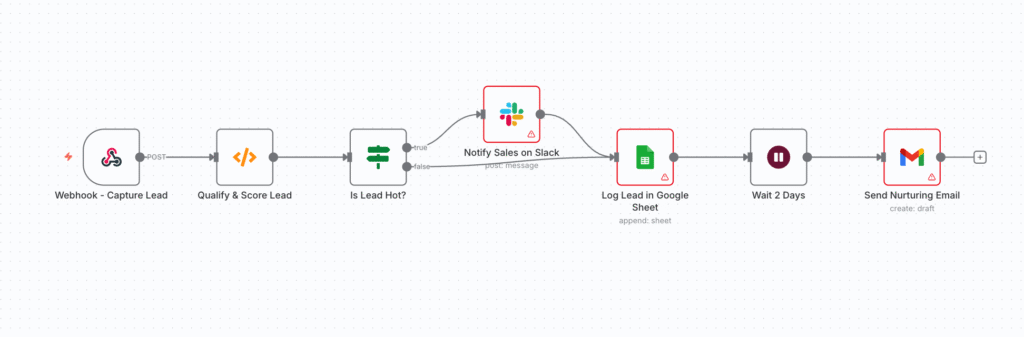
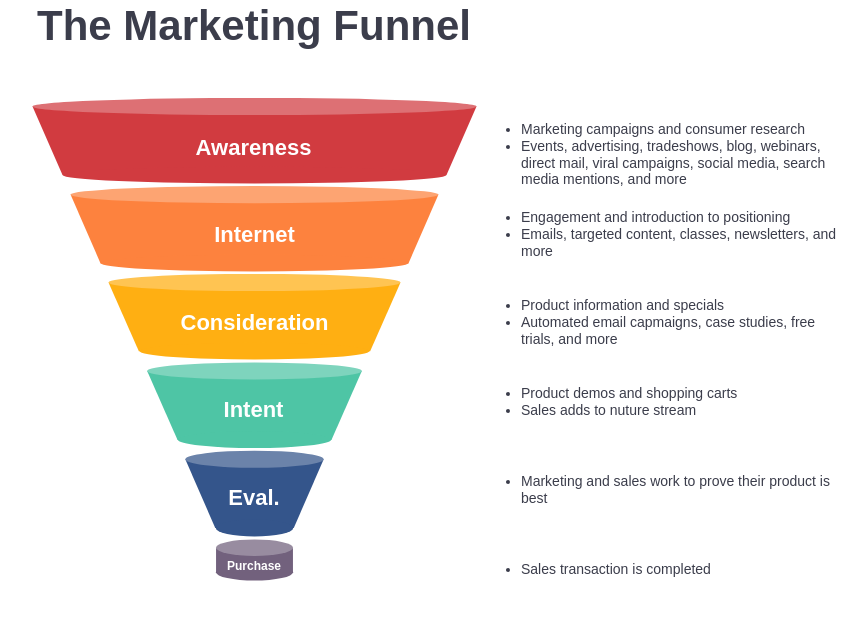
The lead nurturing and qualification system serves as the backbone of modern sales and marketing alignment, addressing the critical challenge of converting anonymous website visitors into qualified sales opportunities. This comprehensive workflow proves invaluable for B2B companies with complex sales cycles where prospects require multiple touchpoints and educational content before making purchasing decisions. Organizations with high-value products or services particularly benefit from this system’s ability to systematically guide prospects through awareness, consideration, and decision stages while providing sales teams with highly qualified leads.
Technology companies utilize this workflow to manage developer and technical buyer journeys that often involve extensive research and evaluation phases. The system’s ability to track engagement with technical documentation, webinar attendance, and product trial activities enables sophisticated scoring algorithms that identify prospects ready for sales engagement while continuing to nurture those still in research phases.
Professional services firms leverage this workflow to demonstrate expertise and build trust with potential clients who require extensive relationship building before engagement decisions. The system’s capability to deliver personalized thought leadership content, case studies, and industry insights based on prospect characteristics and engagement patterns significantly improves conversion rates and shortens sales cycles.
Financial services organizations find particular value in this workflow’s compliance-aware design that ensures appropriate documentation and approval processes while maintaining the personal touch required for high-value client relationships. The system’s ability to integrate with CRM platforms and track detailed interaction histories supports regulatory requirements while optimizing customer experience.
Manufacturing and industrial companies use this workflow to manage complex B2B buyer groups that often include multiple stakeholders with varying information needs and decision-making roles. The system’s sophisticated segmentation capabilities ensure that technical buyers receive detailed specifications while financial decision-makers receive ROI-focused content.
How does it work?
The workflow begins with comprehensive lead capture mechanisms that collect not only basic contact information but also behavioral signals, firmographic data, and explicit interest indicators. The initial data collection process utilizes progressive profiling techniques that gradually gather additional information through subsequent interactions, reducing form abandonment while building detailed prospect profiles over time.
Upon lead entry, the system executes sophisticated qualification algorithms that analyze multiple data points including company size, industry vertical, job title, budget indicators, and timeline signals. This multi-dimensional scoring approach provides more accurate qualification than traditional lead scoring methods, enabling sales teams to prioritize efforts on prospects with the highest conversion potential while ensuring that premature leads receive appropriate nurturing.
The intelligent agent assignment system distributes qualified leads based on territorial rules, product specialization, and current workload distribution. This ensures optimal lead-to-agent matching while preventing leads from falling through cracks due to manual assignment delays. The system maintains detailed assignment logs and implements escalation procedures for high-value prospects that require immediate attention.
Dynamic nurturing sequences adapt content delivery based on prospect engagement patterns, information consumption preferences, and demonstrated interest areas. The system tracks content downloads, email engagement, website behavior, and social media interactions to build comprehensive engagement profiles that inform personalized nurturing strategies. Advanced branching logic ensures that prospects receive relevant content at optimal intervals without overwhelming or under-communicating with potential buyers.
Real-time notification systems alert sales representatives when prospects demonstrate high-intent behaviors such as pricing page visits, competitor comparison downloads, or demo requests. These immediate alerts enable sales teams to engage prospects while interest levels are peak, significantly improving conversion rates and customer experience quality.
Set up steps:
This workflow automates lead scoring and routes leads based on their qualification level. To build it, begin by adding a Webhook node set to the POST method to capture incoming lead data from your web forms or CRM. The webhook should have a unique path, like /new-lead, to receive JSON payloads containing lead details such as name, email, company, and message.
Next, a Function node processes the incoming data to score and categorize each lead. Inside this node, you can write simple JavaScript to assign points based on keywords in the message (e.g., ‘pricing’, ‘demo’) and firmographic data like company size. The lead is then categorized as ‘Hot’, ‘Warm’, or ‘Cold’. From there, an If node checks the lead’s category.
- Webhook Node: Configure to trigger on
POSTrequests. - Function Node: Add JavaScript to calculate a
leadScoreand assign aleadCategory. - If Node: Create a branch to check if
leadCategoryequals ‘Hot’. - Slack Node: On the ‘true’ path of the If node, send an alert to a sales channel with lead details.
- Google Sheets Node: On both the ‘true’ and ‘false’ paths, append the lead’s information and score to a central tracking sheet.
- Wait Node: On the ‘false’ path (for Warm/Cold leads), pause the workflow for a set duration, such as two days.
- Gmail Node: After the wait, send a follow-up nurturing email to the lead.
Ensure you have created and configured credentials for Slack, Google Sheets, and Gmail within n8n before activating the workflow.
3. Social Media Marketing Automation
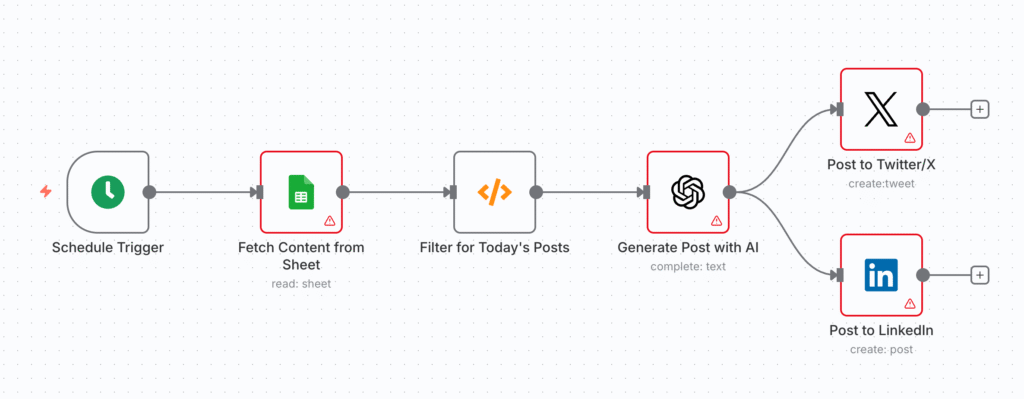
The social media marketing automation workflow addresses the mounting challenge of maintaining consistent, engaging presence across multiple social platforms while managing resource constraints and ensuring brand consistency. This sophisticated system proves particularly valuable for businesses that require regular content publication across platforms with varying audience demographics, content formats, and engagement patterns. Small to medium-sized businesses benefit tremendously from this workflow’s ability to automate content creation, scheduling, and engagement monitoring, effectively providing enterprise-level social media capabilities without requiring dedicated social media teams.
Content creators and influencers leverage this workflow to scale their personal brand presence while maintaining authentic audience engagement. The system’s AI-powered content generation capabilities enable consistent posting schedules across multiple platforms while adapting content styles to platform-specific audience preferences and algorithmic requirements. This automation allows creators to focus on high-value activities such as community building and strategic partnerships while ensuring consistent content flow.
E-commerce businesses find particular value in this workflow’s ability to integrate product catalogs with social media posting schedules, automatically generating product-focused content that drives traffic to online stores. The system’s capability to track social commerce metrics and adjust content strategies based on conversion performance significantly improves return on social media marketing investments.
Agency environments benefit from this workflow’s multi-client management capabilities that enable standardized social media services while maintaining client-specific brand voices and content strategies. The system’s approval workflows and client collaboration features ensure quality control while streamlining production processes across multiple client accounts.
Corporate marketing teams use this workflow to coordinate social media activities with broader marketing campaigns, ensuring consistent messaging across channels while enabling rapid response to market developments and trending topics. The system’s integration with corporate communication tools facilitates cross-team collaboration and maintains compliance with brand guidelines.
How it works
The workflow initiates through multiple trigger mechanisms including scheduled content calendars, RSS feed monitoring for trending topics, and manual content creation requests through integrated forms or collaboration platforms. The content discovery engine continuously monitors industry publications, competitor activities, and trending hashtags to identify relevant topics that align with brand messaging and audience interests.
Advanced AI content generation systems create platform-specific content variations from single content briefs, ensuring optimal formatting, hashtag usage, and call-to-action placement for each social media platform. The system understands platform-specific best practices including character limits, optimal posting times, and engagement strategies, automatically adapting content to maximize reach and engagement on each channel.
The approval workflow component routes generated content through designated review processes that can include brand managers, legal teams, and client stakeholders depending on organizational requirements. This system maintains content quality and brand compliance while enabling efficient review and approval cycles that don’t bottleneck content production schedules.
Multi-platform publishing systems coordinate content release across Facebook, Instagram, LinkedIn, Twitter, YouTube, TikTok, and emerging platforms while respecting platform-specific optimal posting times and frequency guidelines. The system maintains detailed publishing logs and implements error handling procedures that ensure content publication even when individual platform APIs experience temporary issues.
Comprehensive analytics and engagement monitoring systems track performance metrics across all platforms, providing insights into content effectiveness, audience engagement patterns, and conversion outcomes. Advanced sentiment analysis capabilities monitor brand mentions and audience reactions, enabling rapid response to both positive opportunities and potential reputation issues.
Set up steps
This workflow automates your social media calendar, from content generation to multi-platform publishing. To begin, you will need a Google Sheet to act as your content calendar, with columns for scheduledDate, topic, keyMessage, and status. The automation starts with a Schedule node (Cron) configured to run at your desired posting time, such as every day at 9 AM. This trigger initiates the process of fetching and publishing content.
After the trigger, a Google Sheets node reads the entire content calendar. This raw data is then passed to a Function node, which contains JavaScript to filter the list and only return posts scheduled for the current day that haven’t been published yet. The filtered posts are then processed one by one. For each post, an OpenAI node generates compelling copy based on the topic and key message from your sheet. The final step involves sending this AI-generated text to multiple social media nodes in parallel.
- Schedule Node: Set the trigger to a
Cronschedule (e.g.,0 9 * * *for 9 AM daily). - Google Sheets Node: Configure it to read your content calendar sheet.
- Function Node: Add JavaScript to filter posts where
scheduledDateis today andstatusis not ‘Posted’. - OpenAI Node: Craft a prompt that uses the
topicandkeyMessagefields from the Google Sheet to generate a post. - Social Media Nodes: Add nodes for each platform you want to publish to, such as Twitter/X and LinkedIn. Map the AI-generated content to the message field in each node.
Remember to create and select the appropriate credentials for Google Sheets, OpenAI, and your social media accounts within each respective node. After a successful post, you can add a final Google Sheets node to update the status column to ‘Posted’ to prevent duplicate content.
4. CRM Integration and Data Sync

The CRM integration and data sync workflow serves as the central nervous system for organizations that rely on accurate, real-time customer data to drive sales and marketing decisions. This critical workflow addresses the pervasive challenge of data silos that prevent organizations from developing comprehensive customer understanding and delivering consistent experiences across touchpoints. Enterprise organizations with complex technology stacks particularly benefit from this workflow’s ability to maintain data consistency across customer relationship management systems, marketing automation platforms, customer support tools, and business intelligence systems.
Sales-driven organizations leverage this workflow to ensure that customer interaction data from multiple sources flows seamlessly into CRM systems, providing sales representatives with complete customer histories that inform relationship building and deal progression strategies. The workflow’s real-time sync capabilities ensure that opportunities, contact updates, and interaction logs are immediately available across all systems, preventing data lag issues that can impact sales effectiveness.
Marketing teams find tremendous value in this workflow’s ability to sync campaign performance data, lead scoring updates, and behavioral information into CRM systems, enabling more sophisticated lead nurturing and sales handoff processes. The bi-directional sync capabilities ensure that sales feedback and conversion data flows back into marketing systems, enabling continuous campaign optimization and attribution analysis.
Customer support organizations use this workflow to maintain synchronized customer information across support ticketing systems, knowledge bases, and CRM platforms, ensuring that support representatives have access to complete customer histories including purchase patterns, support interactions, and account status information. This comprehensive data access significantly improves first-contact resolution rates and customer satisfaction scores.
Financial services and healthcare organizations particularly benefit from this workflow’s compliance-aware design that maintains audit trails, supports data governance requirements, and ensures that sensitive customer information remains protected throughout synchronization processes while maintaining operational efficiency and data accessibility.
How it works
The workflow operates through sophisticated real-time monitoring systems that detect data changes across connected systems using webhooks, API polling, and database triggers. When customer information updates occur in any connected system, the workflow immediately initiates synchronization processes that propagate changes to all relevant systems while maintaining data integrity and conflict resolution procedures.
Advanced data mapping and transformation engines ensure that information formats, field structures, and data types remain consistent across different systems that may have varying data models and requirements. The system maintains comprehensive mapping tables that translate data between different formats while preserving meaning and relationships, ensuring that customer information remains accurate and usable across all platforms.
Intelligent conflict resolution algorithms handle situations where simultaneous updates occur across multiple systems, implementing prioritization rules based on data source reliability, timestamp accuracy, and business logic requirements. The system maintains detailed audit logs of all synchronization activities, enabling troubleshooting and compliance reporting while providing visibility into data flow patterns and system health.
The workflow incorporates sophisticated data quality management features that validate information accuracy, completeness, and consistency before propagating changes across systems. These quality controls prevent the spread of incorrect or incomplete data while alerting administrators to potential data quality issues that require attention or manual intervention.
Comprehensive error handling and retry mechanisms ensure that temporary system outages or connectivity issues don’t result in data loss or synchronization failures. The workflow maintains queues of pending updates and implements intelligent retry strategies that resume synchronization once connectivity is restored, ensuring eventual consistency across all connected systems.
Set up steps
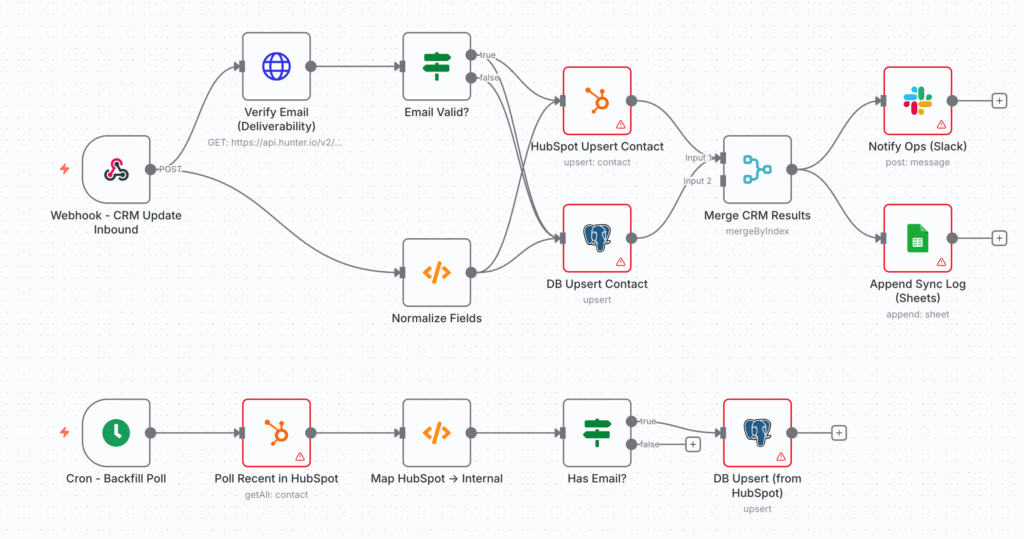
Start by wiring an inbound webhook to capture contact updates from your primary CRM, normalize the payload to a single internal schema, validate email deliverability, and then upsert consistently into your data warehouse and both CRMs. Add a periodic backfill/poll to keep systems converged and log every sync for observability.
- Add Webhook node: POST /crm-contact-updates; return 200 with all entries.
- Add Function node (Normalize Fields): map inbound keys to internal: email, firstName, lastName, phone, company, lifecycleStage, updatedAt.
- Add HTTP Request node (Verify Email): call verifier like Hunter; branch with If node (Email Valid?).
- Add Postgres node (DB Upsert Contact): upsert by email into contacts table.
- Add HubSpot node (Upsert Contact): upsert by email; map name/phone/company/lifecycle.
- Add Salesforce node (Upsert Contact): upsert with lookup Email; map fields.
- Add Merge node (Merge CRM Results): collect DB/HubSpot/SFDC results for unified logging.
- Add Slack node (Notify Ops): post success summary to #revops-sync.
- Add Google Sheets node (Append Sync Log): append timestamp, email, stage, status.
- Add Cron node (Backfill Poll): every 10 minutes poll HubSpot getAll; Function node to map to internal; If node (Has Email?); then Salesforce and Postgres upserts. Configure credentials for Postgres, HubSpot, Salesforce, Slack, Sheets, and set HUNTER_API_KEY in environment.
5. Content Marketing Automation

The content marketing automation workflow revolutionizes how organizations research, create, distribute, and optimize content across multiple channels while maintaining brand consistency and maximizing engagement potential. This sophisticated system addresses the critical challenge of scaling content production to meet modern audience expectations while maintaining quality and relevance standards. Publishing companies and media organizations leverage this workflow to automate research processes, streamline editorial workflows, and optimize content distribution across multiple channels and audience segments.
Educational technology companies find particular value in this workflow’s ability to automatically generate course materials, learning assessments, and supplementary resources based on curriculum requirements and student performance data. The system’s capability to adapt content difficulty and presentation styles based on learner profiles significantly improves educational outcomes while reducing content development overhead.
B2B organizations use this workflow to maintain thought leadership positions through consistent publication of industry insights, trend analyses, and expert commentary that positions organizations as authoritative voices within their markets. The workflow’s ability to monitor industry developments and automatically generate relevant content responses enables rapid market response and competitive advantage maintenance.
Software companies leverage this workflow to automate technical documentation, user guides, and training material creation that keeps pace with rapid product development cycles. The system’s integration with development tools and product management platforms ensures that documentation remains current and accurate while reducing manual maintenance requirements.
Marketing agencies benefit from this workflow’s multi-client content management capabilities that enable standardized content production processes while maintaining client-specific brand voices and content strategies. The system’s approval workflows and collaboration features ensure quality control while streamlining production processes across multiple client accounts.
How it works
The workflow begins with comprehensive content intelligence gathering that monitors industry publications, competitor activities, social media trends, and customer feedback to identify content opportunities that align with business objectives and audience interests. Advanced natural language processing algorithms analyze trending topics, sentiment patterns, and engagement metrics to prioritize content themes that are likely to resonate with target audiences.
AI-powered research engines automatically gather relevant information from authoritative sources, compile supporting data, and generate comprehensive content briefs that serve as foundations for content creation. The system maintains knowledge graphs of industry relationships, expert sources, and historical content performance to ensure that research outputs are accurate, comprehensive, and strategically aligned with content objectives.
Sophisticated content generation systems create multiple content formats from single research briefs, including blog posts, social media content, email newsletters, video scripts, and presentation materials. The AI engines understand brand voice guidelines, audience preferences, and platform-specific requirements, ensuring that generated content maintains consistency while optimizing for specific distribution channels and engagement goals.
Advanced workflow orchestration coordinates content review, approval, and publication processes across multiple stakeholders and distribution channels. The system maintains content calendars, manages approval workflows, and coordinates publication timing to ensure optimal content release schedules that maximize audience reach and engagement potential.
Comprehensive performance analytics systems track content effectiveness across all distribution channels, providing insights into audience engagement patterns, conversion outcomes, and optimization opportunities. Machine learning algorithms continuously analyze performance data to refine content strategies, optimize distribution timing, and improve future content generation accuracy.
Set up steps
This workflow automates the entire content creation pipeline, from a brief in a Google Sheet to a final published post on WordPress. It starts by monitoring a “Content Queue” sheet for new rows. When a new content request is added, the workflow fetches reference materials from a specified Google Drive folder, uses an AI Agent to write the article, publishes it to your CMS, and then updates the original sheet with the status and URL before notifying your team.
The core of this automation is the AI Agent node, which leverages OpenAI’s capabilities. It’s fed with context from Google Drive and a detailed prompt from the sheet, ensuring the generated content is accurate and aligned with your brief. A structured output parser is used to cleanly separate the title and content, making it easy to pass to the WordPress node for seamless publishing.
- Google Sheets Trigger: Set to
On Row Addedfor your content queue sheet. The sheet should have columns fortopic,keywords,referenceFolderId,status, andpostUrl. - Google Drive Node: Configure the
Download Fileoperation, mapping thereferenceFolderIdfrom the trigger to fetch context documents. - AI Agent Node: Select
OpenAIand theStructured Outputagent. Define a JSON schema for the output (e.g.,{"title": "string", "content": "string"}). Craft a prompt that uses the topic and keywords from the sheet and instructs the AI to use the attached files as a knowledge base. - WordPress Node: Use the
Create Postoperation. Map thetitleandcontentfields from the AI Agent’s parsed JSON output. Set the status topublish. - Google Sheets Node: Use the
Update Rowoperation to change thestatuscolumn to ‘Published’ and populate thepostUrlwith the link from the WordPress node’s output. - Slack Node: Send a message to your content channel, including the title and link of the newly published article for team visibility.
To make this workflow operational, ensure you have valid credentials configured for Google Sheets, Google Drive, OpenAI, WordPress, and Slack within your n8n instance.
Advanced Setup and Optimization Strategies
Successful implementation of n8n workflow examples for marketing automation requires careful attention to infrastructure configuration, performance optimization, and ongoing maintenance procedures. Advanced practitioners understand that workflow reliability and performance directly impact marketing effectiveness, making proper setup procedures critical for long-term success. The foundation of any robust automation system begins with appropriate hosting infrastructure that can handle variable workloads while maintaining consistent performance during peak usage periods.
Container orchestration using Docker and Kubernetes provides scalable infrastructure that can adapt to changing workflow demands while maintaining service availability. Implementing load balancing and auto-scaling capabilities ensures that workflows continue operating effectively even during high-traffic periods or when processing large data volumes. Database optimization becomes particularly important when workflows manage extensive customer data and interaction histories, requiring proper indexing, backup procedures, and performance tuning to maintain responsiveness.
Security considerations extend beyond basic authentication to include comprehensive data encryption, network security, and access control mechanisms that protect sensitive customer information throughout workflow execution. Implementing proper logging and monitoring systems enables proactive identification of performance issues and security concerns while providing audit trails necessary for compliance requirements and troubleshooting activities.
Advanced workflow optimization involves continuous monitoring of execution times, resource utilization, and error rates to identify bottlenecks and improvement opportunities. Implementing proper caching strategies, optimizing API call patterns, and utilizing efficient data processing techniques can significantly improve workflow performance while reducing operational costs. Version control and deployment procedures ensure that workflow updates can be implemented safely without disrupting ongoing automation activities.
Integration testing becomes critical when workflows connect multiple systems and services, requiring comprehensive test suites that validate data flow, error handling, and performance characteristics under various conditions. Implementing staged deployment procedures with rollback capabilities ensures that updates can be deployed safely while maintaining business continuity requirements.
Best Practices for n8n Marketing Automation
The successful deployment of n8n workflow examples for marketing automation depends heavily on adherence to established best practices that ensure reliability, maintainability, and optimal performance. Documentation standards play a crucial role in workflow sustainability, requiring comprehensive documentation of workflow logic, integration requirements, and configuration procedures that enable team collaboration and knowledge transfer. Proper naming conventions for nodes, variables, and workflows significantly improve maintainability and troubleshooting efficiency.
Error handling strategies must encompass both expected and unexpected failure scenarios, implementing graceful degradation procedures that maintain workflow functionality even when individual components experience issues. Retry mechanisms, timeout configurations, and fallback procedures ensure that temporary service interruptions don’t result in permanent workflow failures or data loss situations.
Data quality management becomes increasingly important as workflows scale to handle larger volumes of customer information. Implementing validation procedures, data cleansing routines, and duplicate detection mechanisms ensures that automation systems operate with high-quality information while preventing the propagation of errors throughout connected systems. Regular data audits and quality assessments help identify potential issues before they impact customer experiences or business operations.
Performance monitoring and optimization require ongoing attention to workflow execution metrics, resource utilization patterns, and user experience indicators. Establishing baseline performance measurements and implementing alerting systems enables proactive identification of issues that require attention or optimization efforts. Regular performance reviews and optimization activities ensure that workflows continue meeting business requirements as data volumes and complexity increase.
Compliance and governance considerations must be integrated into workflow design from the beginning, ensuring that automation systems meet regulatory requirements and organizational policies throughout their operational lifecycle. Implementing proper access controls, audit logging, and data retention procedures supports compliance requirements while maintaining operational efficiency and business agility.
Common Challenges and Solutions
Implementation of n8n workflow examples for marketing automation often encounters specific challenges that require systematic approaches and proven solutions. Data integration complexities frequently arise when connecting systems with different data models, API limitations, and synchronization requirements. Resolving these challenges requires careful analysis of data relationships, implementation of appropriate transformation logic, and establishment of data quality monitoring procedures that ensure accurate information flow between systems.
Performance bottlenecks commonly occur when workflows scale beyond initial design parameters or when external service limitations impact execution speed. Addressing these issues requires systematic performance analysis, optimization of API usage patterns, and implementation of caching strategies that reduce external service dependencies while maintaining data accuracy and freshness requirements.
Maintenance overhead can become significant as workflow complexity increases and business requirements evolve. Implementing modular workflow designs, establishing clear documentation standards, and creating comprehensive testing procedures helps manage maintenance requirements while ensuring that updates can be implemented safely and efficiently.
Integration failures often result from API changes, service outages, or authentication issues that disrupt workflow execution. Building robust error handling procedures, implementing monitoring and alerting systems, and establishing escalation procedures ensures that integration issues are identified and resolved quickly while minimizing impact on business operations.
Scalability challenges emerge as organizations grow and workflow requirements become more complex. Planning for scalability from the beginning, implementing proper infrastructure design, and establishing performance monitoring procedures ensures that workflows can grow with business needs while maintaining reliability and performance standards.
Future Trends in n8n Marketing Automation
The evolution of n8n workflow examples for marketing automation continues accelerating as artificial intelligence capabilities become more sophisticated and integration possibilities expand. Advanced AI agents are beginning to handle increasingly complex decision-making processes within workflows, enabling autonomous optimization of campaign parameters, content generation, and audience segmentation based on real-time performance data and predictive analytics.
Conversational AI integration is transforming customer interaction workflows, enabling sophisticated chatbot implementations that can handle complex customer inquiries, qualify leads, and guide prospects through detailed sales processes. These advanced conversational systems integrate seamlessly with existing CRM and marketing automation platforms, providing personalized customer experiences while capturing valuable interaction data for continuous optimization.
Real-time personalization capabilities are becoming increasingly sophisticated, enabling workflows to adapt content, messaging, and offer timing based on immediate customer behavior and contextual signals. These advanced personalization systems consider factors such as current location, device type, browsing history, and real-time engagement patterns to deliver highly relevant experiences that significantly improve conversion rates and customer satisfaction.
Privacy-first automation architectures are emerging in response to increasing data protection regulations and consumer privacy expectations. These new approaches enable sophisticated marketing automation while minimizing data collection requirements and providing transparent control mechanisms that align with privacy regulations while maintaining marketing effectiveness.
Edge computing integration is beginning to enable more responsive automation workflows that can process customer data and execute campaigns with reduced latency and improved performance characteristics. These distributed architectures support real-time personalization and immediate response capabilities that were previously impossible with centralized processing approaches.
Measuring Success and ROI
Effective measurement of n8n workflow examples for marketing automation requires comprehensive analytics frameworks that track both operational efficiency metrics and business impact indicators. Key performance indicators must encompass workflow execution reliability, processing speed, error rates, and resource utilization to ensure that automation systems operate effectively while delivering expected business benefits.
Marketing effectiveness metrics provide insights into campaign performance, customer engagement improvements, and conversion rate optimizations that result from automation implementation. These measurements should include email engagement rates, lead qualification accuracy, customer lifecycle progression, and revenue attribution to demonstrate clear business value from automation investments.
Operational efficiency gains can be quantified through measurements of time savings, resource allocation improvements, and manual task reduction that result from workflow automation. These metrics help justify automation investments while identifying additional optimization opportunities that can further improve operational effectiveness and cost efficiency.
Customer experience improvements represent critical success indicators that demonstrate automation impact on customer satisfaction, engagement quality, and relationship development. Tracking metrics such as response times, personalization effectiveness, and customer feedback scores provides insights into automation impact on overall customer experience quality.
Return on investment calculations must consider both direct cost savings and revenue generation improvements that result from automation implementation. Comprehensive ROI analysis includes implementation costs, ongoing operational expenses, and quantified benefits from improved efficiency, increased conversions, and enhanced customer relationships.
Conclusion
The implementation of n8n workflow examples for marketing automation represents a fundamental shift toward more efficient, personalized, and data-driven marketing operations that deliver measurable business results. These sophisticated automation systems enable organizations to scale their marketing efforts while maintaining high levels of personalization and customer engagement that drive sustainable business growth. The five workflow examples presented in this guide provide proven foundations for marketing automation success, offering scalable solutions that can be customized to meet specific business requirements and industry challenges.
The future of marketing automation lies in the intelligent integration of artificial intelligence, real-time personalization, and comprehensive customer data management that creates seamless, engaging experiences across all customer touchpoints. Organizations that invest in building sophisticated automation capabilities using platforms like n8n position themselves for competitive advantage in increasingly digital marketplaces where customer expectations continue rising and operational efficiency becomes critical for business sustainability.
Success with n8n workflow examples for marketing automation requires commitment to best practices, continuous optimization, and ongoing adaptation to changing customer needs and technological capabilities. The investment in building robust automation systems pays dividends through improved operational efficiency, enhanced customer experiences, and sustainable revenue growth that compounds over time as systems become more sophisticated and data-driven insights become more actionable.
As marketing automation continues evolving, organizations that master these foundational workflows will be well-positioned to adopt emerging technologies and capabilities that further enhance their marketing effectiveness. The principles and practices outlined in this guide provide the foundation for building world-class marketing automation systems that drive business success in 2026 and beyond.
For those ready to implement these powerful automation solutions, n8n offers both cloud and self-hosted options that can accommodate any business size and technical requirements. The platform’s extensive template library and active community provide additional resources for accelerating implementation and optimizing performance.